Blog
Electricity has a crucial role to play in addressing eine entscheidende Rolle. Shipping is no exception as well. There’s a growing need for a change in the power supply of vessels such as ferries, tankers, bulk carriers, container ships, cruisers, and many others. Along with environmental concerns and regulatory compliance around the world, there are clear economic benefits from the technology that has allowed ships to plug into the local electrical grid while docked at port. This alternative technology that we are talking about is the Onshore-Stromversorgung.
What is an Onshore Power Supply OPS?
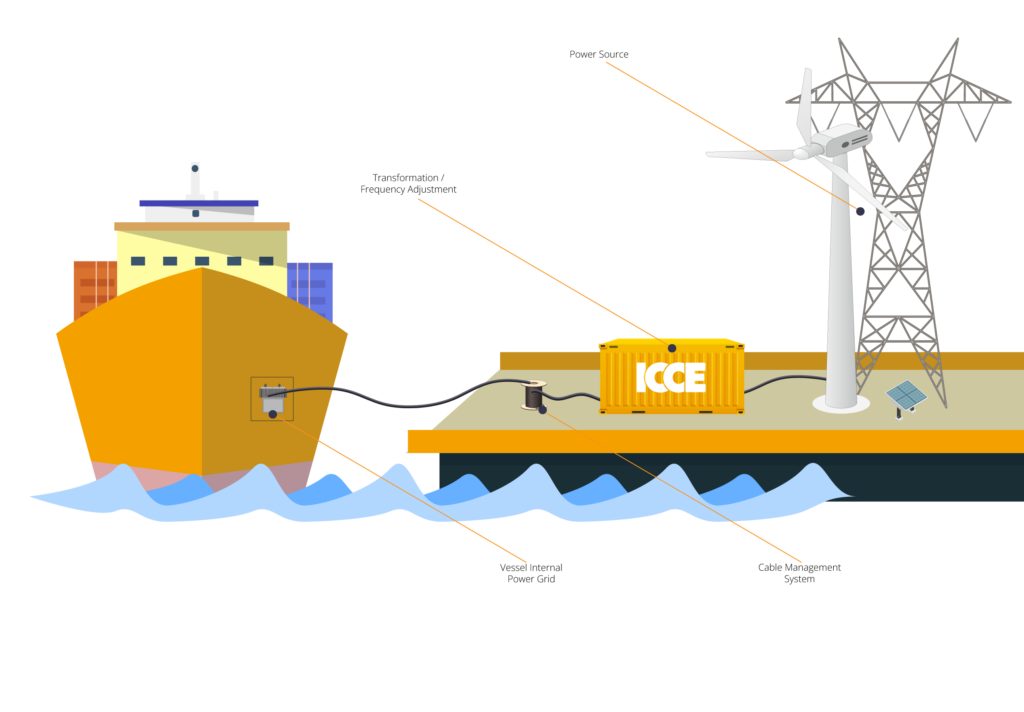
OPS ist ein System, das die Stromversorgung der an Hafenterminals angedockten Schiffe über das Landstromnetz ermöglicht. It significantly reduces pollutant Treibhausgasemissionen während der Liegezeit des Schiffes erheblich reduziert. Along with the reduction of carbon emissions for both the vessel and port environment, wird die Onshore Power Supply (OPS) also reduces noise, lowers costs, and enhances the working conditions for seafarers aboard the vessel.
A typical OPS installation requires a building that houses the necessary technical equipment, which usually includes switchgear, transformers, and frequency converters. This equipment is used to adapt the shore’s electrical characteristics, such as voltage and frequency, to match those of the ship.
Based on the situational analyses, we can offer a customizable solution for OPS-Betriebs, consisting of Ehouse and electrical equipment tailored to meet the demands of the port. There are 5 different types of OPS systems based on the specific port requirements and vessel types. When deciding on the OPS type, certain factors such as power demand, infrastructure investment, and environmental regulations should be considered.
ICCE ist ein schlüsselfertiges Unternehmen für Elektrotechnik & Automatisierung, Siemens Diamond Partner, Schneider Electric Alliance System Integrator und registrierter ABB-Partner. Mit eigener Fertigung, von der automatisierten Schaltschrankproduktion bis zum Stahlcontainerbau, und Projekten in über 20 Ländern übernehmen wir alles von der ersten Zeichnung bis zum letzten Kabel.
Arten von OPS-Systemen:
High Voltage Shore Connection (HVSC): HSLS Systemen versorgen Schiffe mit Strom bei Hochspannung. Ideal für größere Schiffe wie Containerschiffe, Massengutfrachter, Tanker und große Kreuzfahrtschiffe. Spannungslevel: 6,6 KV, 11 KV oder höher.
Low Voltage Shore Connection (LVSC): NSLS System versorgen Schiffe mit Strom bei Niederspannung (400-690 V). Geeignet für kleinere Schiffe wie Fähren, Kreuzfahrtschiffe und kleinere Frachtschiffe. Spannungslevel: 400-690V.
Hybrides OPS bieten ein Gleichgewicht zwischen Netzstromzuverlässigkeit und Integration erneuerbarer Energien.Anwendungen:Kombinieren Sie Strom aus dem lokalen Netz, erneuerbaren Energiequellen (wie Sonne und Wind) und Energiespeichersystemen (wie Batterien). Spannungslevel: Übliche Spannungspegel umfassen 400 V Wechselstrom für die Verteilung innerhalb des Hafens und 11 kV oder mehr für den Anschluss an das Netz.
Gleichstrom-OPS-System (DC) Versorgen Sie Schiffe mit Gleichstrom (DC) statt mit Wechselstrom (AC) Anwendungen: Wird für Schiffe mit Gleichstrom-Bordsystemen oder bei der Integration erneuerbarer Energiequellen verwendet, die Gleichstrom erzeugen Spannungslevel: Übliche Spannungsebenen sind 400 V Gleichstrom für die Verteilung innerhalb des Hafens und höhere Spannungen (z. B. 1 kV oder mehr) für den Anschluss an das Stromnetz oder an erneuerbare Energiequellen
Mobiles OPS System sind tragbare oder temporäre Systeme, die eingesetzt werden können, um Schiffe an Standorten ohne permanente OPS-Infrastruktur mit Landstrom zu versorgen. Anwendungen: Ideal für den Einsatz in Häfen, in denen OPS noch nicht installiert ist, oder während temporärer Einsätze Spannungslevel: Jeder gewünschte Spannungspegel, normalerweise Niederspannung
- Elektrisches Design, Engineering und Planung
- E-Häuser
- MS/NSSchaltanlagen
- Trafostationen
- Frequenzumrichter
- Kabelmanagementsystem
- Kabel Management System
- Commissioning & Start-up
Das könnte Sie interessieren: